
Before coffee ever reaches the roaster—or your cup—it goes through a critical step called processing. Processing is what happens to the coffee cherry after it’s picked, and it plays a huge role in shaping flavor, sweetness, acidity, and body.
At Alabaster Coffee, we source and roast coffees that showcase how processing influences taste. Three of the most common and impactful methods you’ll encounter are washed, honey, and natural. Here’s what they mean—and how they show up in the cup.
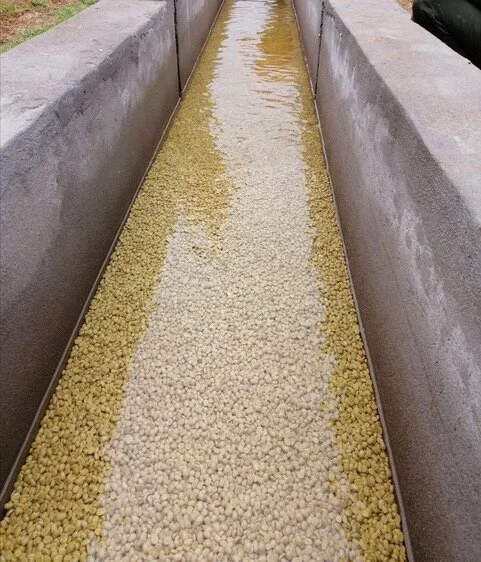
Washed coffee (Xam Tai, Laos)
Washed Process (Clean & Bright)
Washed process (sometimes called wet process) coffees are known for their clarity and brightness. After harvest, the coffee cherry’s skin and fruit are mechanically removed. The beans are then fermented in water to break down any remaining mucilage, thoroughly washed, and dried.
Because most of the fruit is removed early, washed coffees highlight the bean’s intrinsic qualities—origin, variety, and growing conditions—rather than fermentation-driven flavors. The result is a cup that’s often crisp, articulate, and transparent.
Washed Process at a Glance
Typical flavors: Citrus, floral, crisp acidity
Body: Light to medium
Great for: Pour-over, drip, light-to-medium roasts
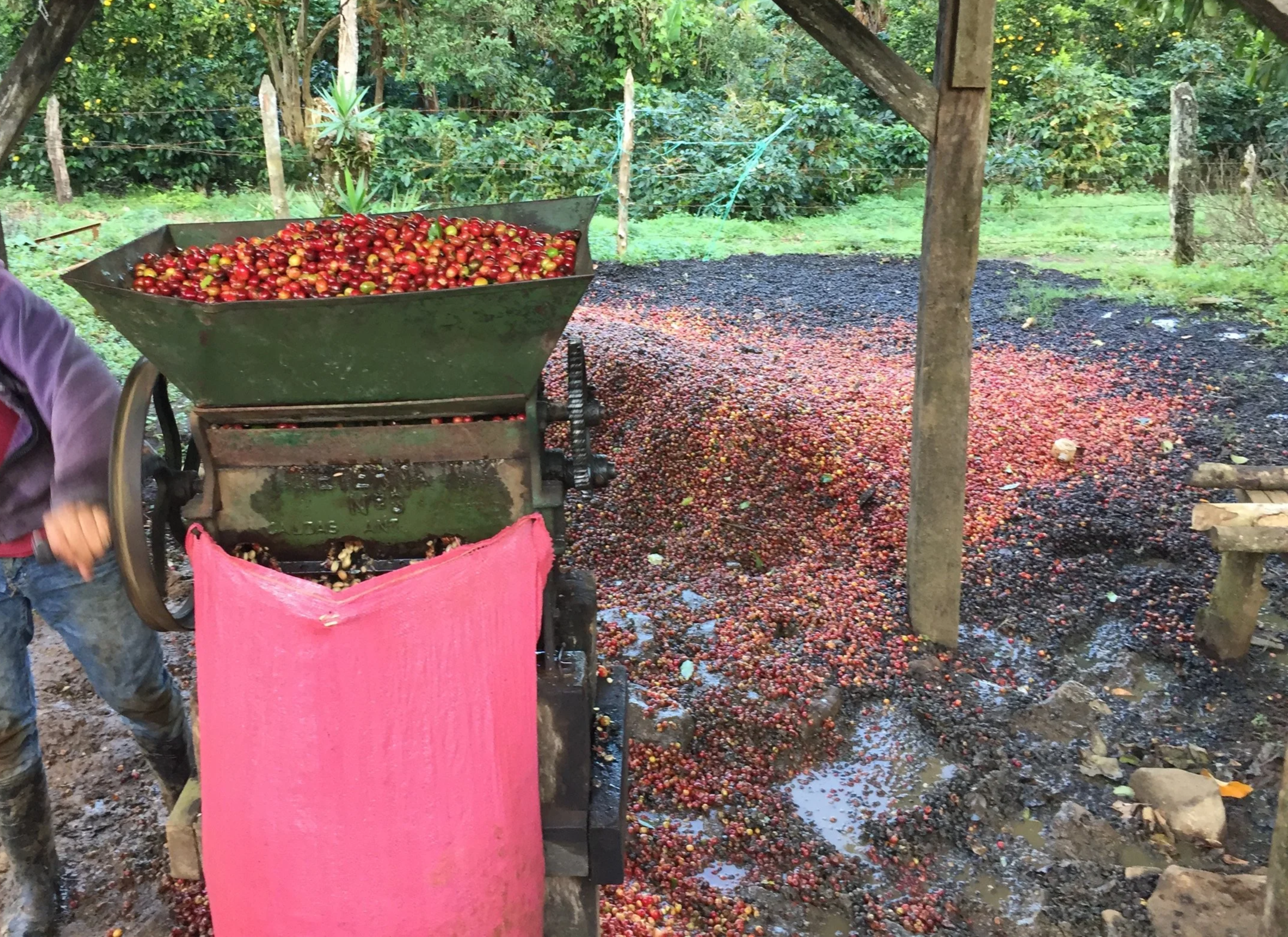
Coffee cherries in a depulper (Jinotega, Nicaragua)
Honey Process (Sweet & Balanced)
Honey process coffees bridge the gap between washed and natural. The skin of the cherry is removed, but some (or all) of the sticky fruit layer—called mucilage—is intentionally left on the bean during drying.
The amount of remaining mucilage varies, often described as yellow, red, or black honey, and directly affects sweetness and body. Honey processed coffees tend to offer rounded sweetness, balanced acidity, and a syrupy mouthfeel without overwhelming fruitiness.
This method also typically uses less water than washed processing, making it an appealing option in regions where water conservation is important.
Honey Process at a Glance
Typical flavors: Stone fruit, caramel, brown sugar
Body: Medium
Great for: Filter coffee or espresso
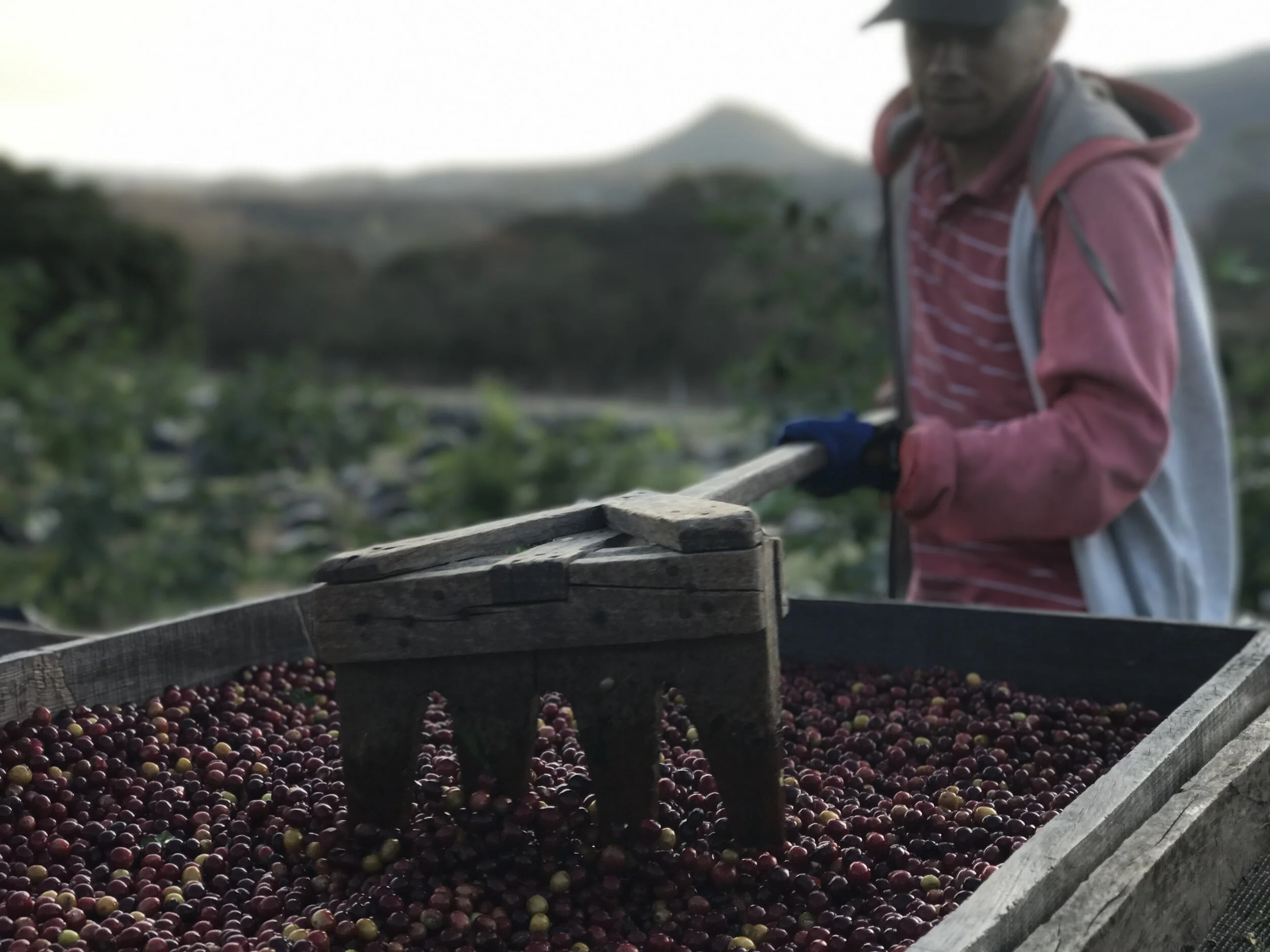
Natural processing on raised drying beds (Jinotega, Nicaragua)
Natural Process (Bold & Fruit-Forward)
Natural process (or dry process) coffees are dried with the entire cherry intact. Whole cherries are laid out on patios or raised beds, where they dry slowly over time. During this process, the beans absorb sugars and flavor compounds from the fruit.
When carefully managed, natural coffees can be intensely expressive—often juicy, fruity, and wine-like. Because fermentation happens inside the cherry, this method requires close attention to avoid defects, but the reward is a deeply complex cup.
Natural Process at a Glance
Typical flavors: Berry, tropical fruit, fermented sweetness
Body: Medium to full
Great for: Espresso, immersion brewing, adventurous drinkers
What This Means for Your Cup
Processing is one of the biggest reasons two coffees from the same country—or even the same farm—can taste wildly different. At Alabaster Coffee, we choose coffees and roast profiles that let each processing method shine:
Washed coffees for clarity and vibrancy
Honey processed coffees for balance and sweetness
Natural coffees for bold, fruit-driven character
Understanding processing gives you a new lens for exploring flavor—and a better way to find coffees you’ll love.
Taste the Difference at Alabaster Coffee
Ready to explore?
We’re currently roasting coffees that highlight each processing style, including:
Washed Process Coffees: Clean, expressive single origins from Central and South America
Honey Process Coffees: Sweet, nuanced offerings with caramelized depth
Natural Process Coffees: Fruit-forward coffees for those who love complexity
👉 Shop our coffees to discover which processing method speaks to your palate—and enjoy the story behind every cup.
Every coffee tells a story, from the farm to the process to your brew. We’re grateful to share that story with you.\!
Brew Tips by Processing Method (Bonus)
Washed: Highlight acidity and clarity with pour-over or batch brew.
Honey: Try a slightly lower brew ratio for enhanced sweetness.
Natural: Immersion methods or espresso bring out body and fruit intensity.